
Laparoscopic Tubal Recanalization is a surgical procedure designed to restore fertility in women whose fallopian tubes have been blocked or tied (commonly after sterilization). It involves rejoining the severed or obstructed sections of the fallopian tubes to allow natural conception.
This procedure is ideal for women who wish to become pregnant after a prior tubal ligation or who have tubal blockages due to infection or surgery. It offers a minimally invasive alternative to IVF for select candidates.
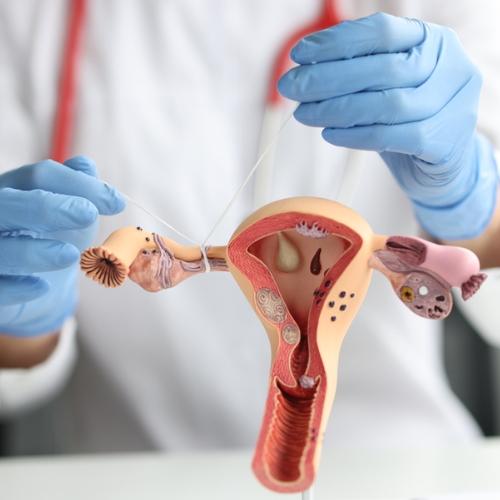
The procedure, performed under general anesthesia with laparoscopy, includes:
Inserting a laparoscope through a small abdominal incision.
Precisely locating the blocked or ligated section of the fallopian tubes.
Removing scarred or damaged portions if necessary.
Reconnecting the healthy ends with fine sutures or microsurgical instruments.
Checking tube patency by injecting dye through the uterus to confirm openness.
Our specialists are experienced in delicate tubal microsurgery, increasing the chances of successful tubal repair and natural conception.
We use state-of-the-art laparoscopic tools and microsutures to ensure accurate alignment and healing of the fallopian tubes.
We assess each case comprehensively and help you explore the best fertility options based on age, tube condition, and reproductive goals.
Laparoscopic Tubal Recanalization is a hope-restoring option for women who want to conceive naturally after tubal blockage or sterilization. The key benefits include:
The success of laparoscopic tubal recanalization largely depends on the type of previous tubal ligation, the remaining length of the tube, and the patient’s age. Women under 35 with at least 4–5 cm of healthy tube on each side often experience conception rates of 60–70% within 1–2 years post-surgery.
Our team evaluates tube quality during surgery and provides detailed follow-up to optimize reproductive outcomes. It’s particularly recommended for women who had clips or rings used in their initial sterilization, as these methods allow for better restoration.
Most patients are discharged within 24 hours of surgery and can return to routine activities within a week. Mild cramps and spotting are common during the first few days. We advise avoiding heavy lifting, intercourse, or strenuous activity for 2–3 weeks to promote proper healing.
A follow-up ultrasound may be scheduled to assess tubal patency and healing. Fertility counseling is offered post-surgery to guide couples on timing intercourse, tracking ovulation, and understanding when to seek further help. In most cases, patients can attempt natural conception within 2–3 cycles after surgery.